Conecast
CME arrival modeling with HUXt and Gaussian-process surrogates
Conecast is a local, self-contained workflow for emulating coronal mass ejection (CME) arrival at Earth with HUXt and Gaussian-process surrogates.
| Project guide | Input-preparation tutorial | GitHub repository | Notebook guide |
What it does
- prepares solar-wind boundary conditions from GONG magnetograms via WSA+
- runs HUXt-based CME simulations for curated events
- trains per-event GP surrogate models for hit or miss classification and arrival-time regression
- provides tutorial notebooks and Colab entry points
| Hit probability | Arrival time | HUXt heliosphere |
|---|---|---|
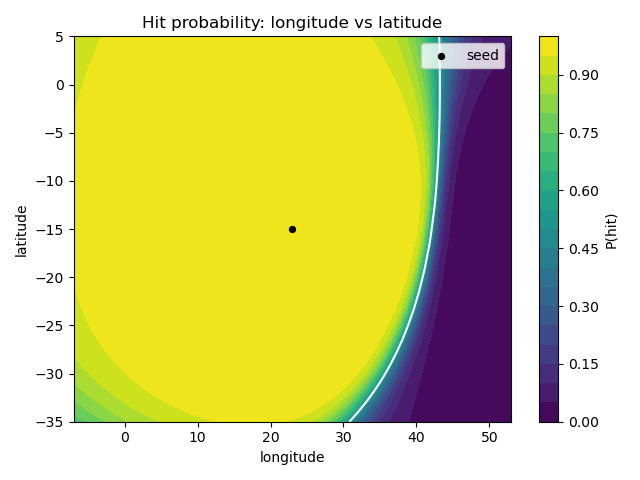 | 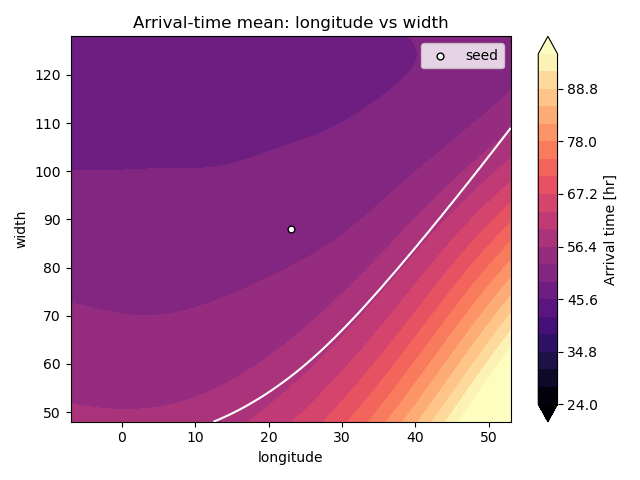 | 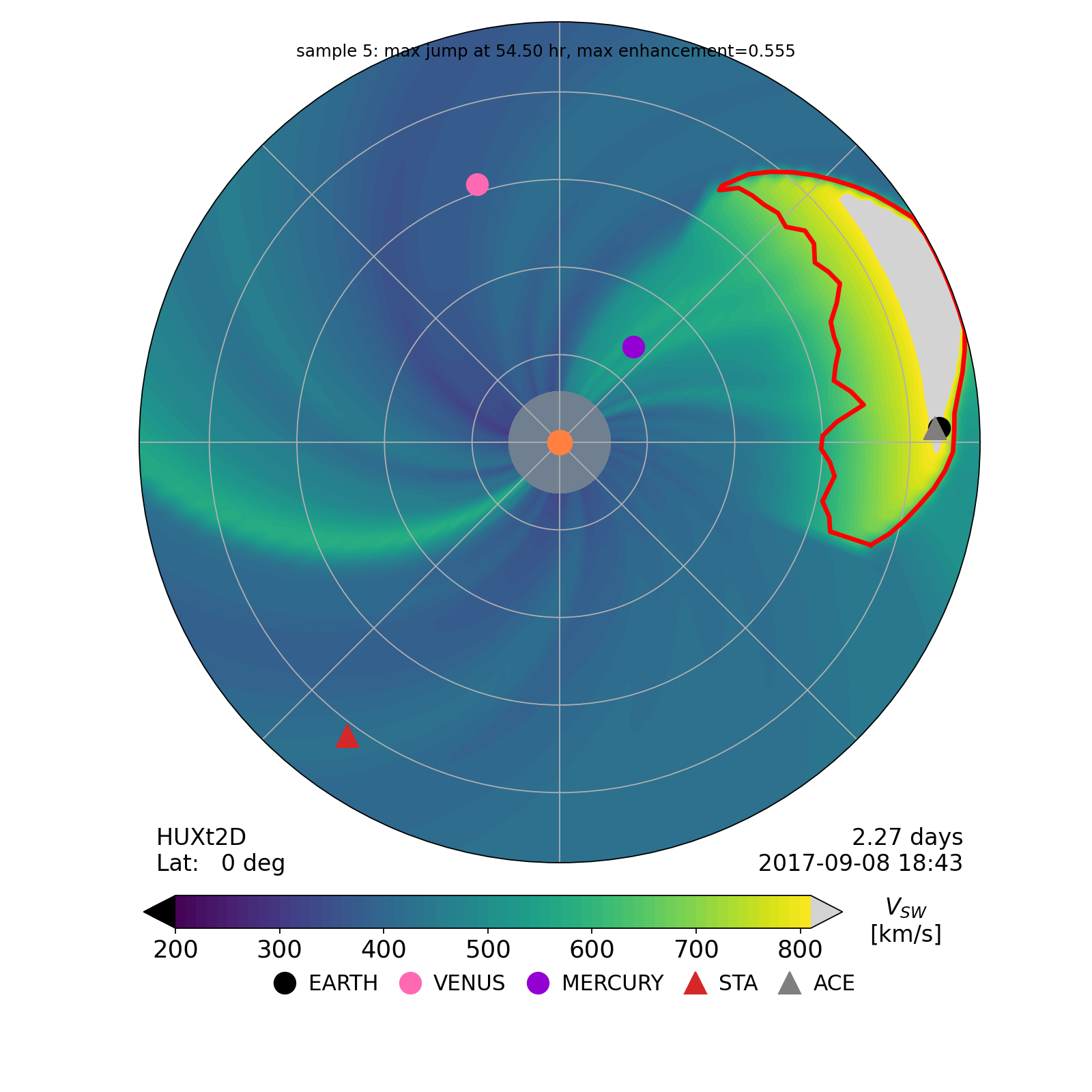 |
Conecast combines WSA+, HUXt, and Gaussian-process surrogates to turn curated CME events into reproducible forecasting experiments.
Quick start
For a quick lecture explaining material you may watch Youtube: Conecast in a nutshell.
python scripts/fetch_wsaplus_checkpoint.py
python scripts/generate_huxt_input.py --event 2017-09-06
python scripts/gp_huxt_surrogate.py --event 2017-09-06 design --n 300
python scripts/gp_huxt_surrogate.py --event 2017-09-06 run --limit 20
python scripts/gp_huxt_surrogate.py --event 2017-09-06 fit
python scripts/gp_huxt_surrogate.py --event 2017-09-06 analyze
The repository does not ship large runtime data. WSA+ checkpoints, magnetograms, boundary files, and run outputs are downloaded or generated on demand.
Tutorial notebooks
Hands-on exercises
Exercise set (built for the ASAP summer school). You provision a new CME event and launch a HUXt batch, then - while it runs in the background - study how surrogate skill scales with the number of runs, how the definition of a “hit” reshapes the model, and which launch parameter drives arrival time.
See the exercises guide for the run sheet and Colab notes (the free Colab tier has no terminal, so the batch is launched as a background process).
- Exercise 1 - Pick a new event and launch a batch
- Exercise 2 - How many HUXt runs does the surrogate need?
- Exercise 3 - What counts as a “hit”? (compound thresholds)
- Exercise 4 - Your event: fit, importance, and contrast